
Loading...
Serving Yorba Linda, CA and surrounding areas. (657) 366-2795
Yorba Linda Sunrooms & Patios is a licensed sunroom contractor serving La Habra, CA with sunroom remodeling, patio enclosures, and four season room additions. We know La Habra's postwar housing stock well - the ranch-style homes, aging patio covers, and mature landscaping that define most properties in this city - and we have been serving the area since 2016.
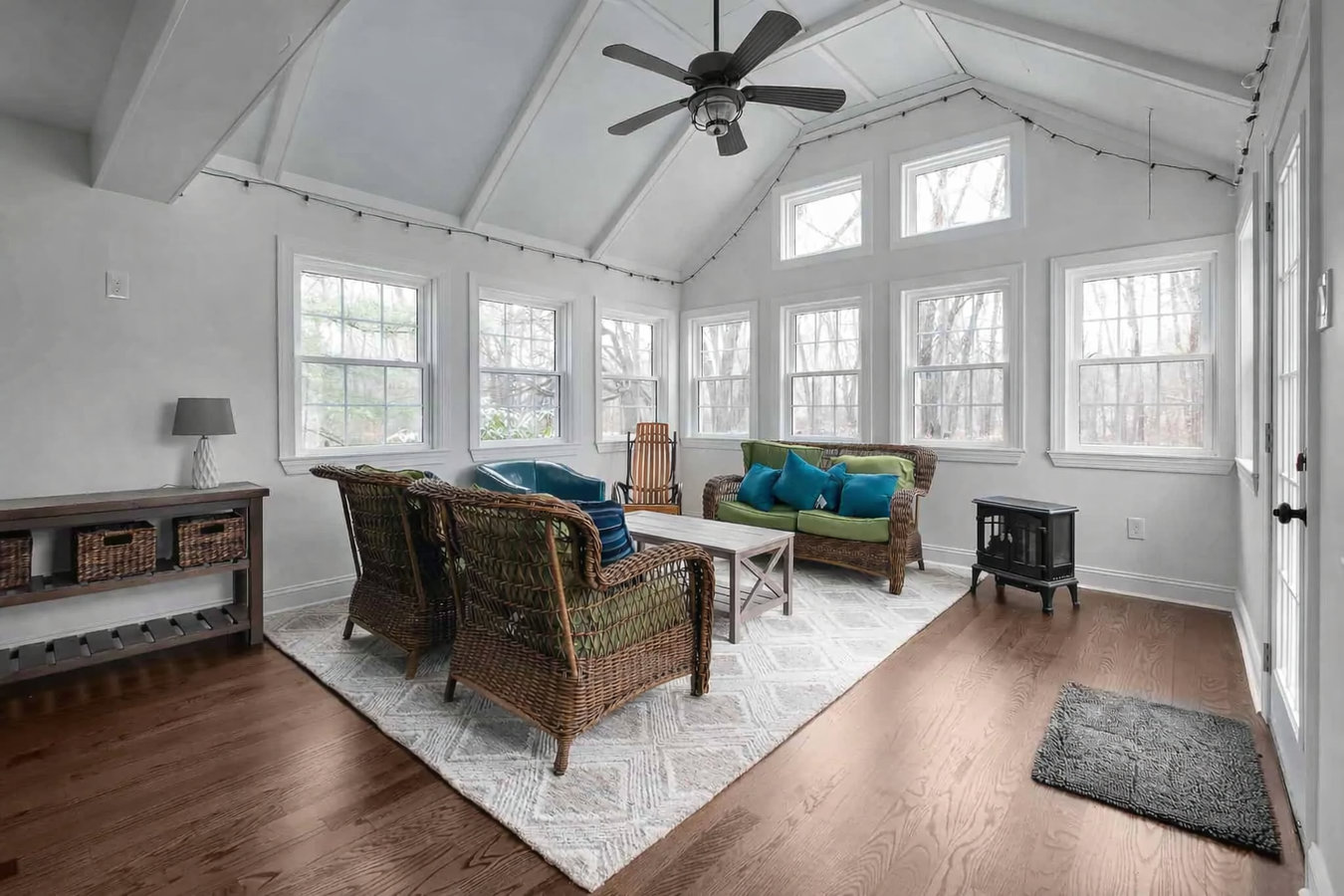
La Habra has a large inventory of older patio enclosures and screened rooms added to ranch homes in the 1970s, 1980s, and 1990s. Many are still structurally sound but have single-pane glass, no insulation, and no climate control - which makes them unusable for most of the year. Our sunroom remodeling service brings those spaces up to current standards, with proper glazing, sealed framing, and HVAC connection that turns a room you avoid into one you actually use.
La Habra's single-story ranch homes almost always have a rear concrete patio - sometimes covered, sometimes open. These slabs were poured 50 to 70 years ago and, while many are still in workable condition, they need to be assessed before an enclosure goes up on top of them. We check the slab, the attachment point at the back wall, and any root intrusion from the mature trees common on La Habra lots before we quote anything.
La Habra sits at the northwest edge of Orange County, close enough to get some coastal influence but warm enough in summer that an uninsulated glass room becomes uncomfortable by late morning. A four season sunroom built with insulated glass and connected to your home's heating and cooling gives La Habra homeowners a room they can use in July as easily as in February.
With median home values in La Habra around $650,000 to $700,000, adding a permitted sunroom is a reasonable investment for homeowners who plan to stay in the area. We design additions to match your existing roofline and exterior, and we pull all required permits with the City of La Habra Building and Safety Division so the new space counts as legitimate square footage in an appraisal.
La Habra's mild spring and fall evenings are ideal for a screened outdoor living space. Screen rooms let in the breeze and keep out insects without the cost of full glass enclosure. They work especially well on La Habra properties where the rear patio is shaded by mature trees and the homeowner wants to enjoy the yard without going fully inside - a good option for homeowners not ready for the full sunroom investment.
Many La Habra homeowners have an open concrete patio they are not getting much use out of - too hot in summer, too exposed in winter rainstorms, and always gathering leaves and debris. A patio-to-sunroom conversion turns that underused slab into a proper room while often keeping the existing concrete as the floor foundation, which lowers the overall project cost compared to building from bare ground.
La Habra is a fully built-out suburb with about 62,000 residents and very little new construction. The bulk of the housing was built between the 1940s and the 1970s, which puts most homes at 50 to 80 years old. The dominant style is the single-story ranch house - low-pitched roofs, attached garages, stucco exteriors, and concrete driveways and patios that have been weathering the Southern California sun for decades. Around 55 percent of La Habra households are owner-occupied, and those homeowners are generally maintaining and updating homes that are well past their original material lifespan. Concrete flatwork from the 1950s and 1960s is often cracked, lifted by tree roots, or settling from decades of soil movement. Older patio covers are reaching the end of their useful life. The demand for enclosure work and sunroom upgrades in La Habra is driven by a housing stock that is aging out of its original condition, not by new development.
Climate and terrain add additional layers to that picture. La Habra's summers are hot and dry - temperatures reach the mid-90s regularly, and the intense UV exposure does real damage to stucco, exterior caulk, and older roofing materials over time. Fall and winter bring Santa Ana wind events that can top 50 to 70 mph, causing debris damage to outdoor structures and drying out soil rapidly between rainy spells. The northern parts of La Habra rise toward the Puente Hills, where properties deal with slope drainage, soil saturation during winter rains, and seasonal ground movement that puts stress on concrete and foundations throughout the year. A contractor who does not regularly work on older homes in this part of Orange County will underestimate what a La Habra project actually involves.
Our crew works throughout La Habra regularly, and we pull permits with the City of La Habra Building and Safety Division on every permitted project we complete here. We know what the local plan check process looks like and how to prepare permit applications for the types of projects common in this city - older homes with unconventional patio configurations and mixed-era structural additions that need to be addressed accurately in the permit drawings.
La Habra sits right on the Orange County and Los Angeles County border, surrounded by Brea, Fullerton, La Mirada, and Whittier. Lambert Road and Imperial Highway are the main east-west corridors through town, and the neighborhoods south of those roads toward Fullerton tend to have the flattest lots and the oldest housing. The Westridge area in the hills to the north is among the newer and more upscale residential sections. The Children's Museum at La Habra near downtown is one of the city's most recognized landmarks - a 1923 Union Pacific train depot that has been a fixture of the community for generations. Whether we are working on a hillside property near the Puente Hills or on one of the flat ranch-home streets closer to Brea, we know what the soil and structures typically look like in each part of La Habra.
We also regularly serve homeowners in neighboring Fullerton to the south, where a similar mix of mid-century housing and mature landscaping creates the same project conditions we see throughout La Habra. Homeowners in Brea to the east are a regular part of our service area as well - Brea's hillside neighborhoods share some of the same soil and drainage characteristics as La Habra's northern sections.
Call us or fill out the contact form and we will get back to you within one business day. We will ask about your home's age, existing patio or outdoor structure, and what you are hoping to do with the space - that context makes the site visit much more productive.
We come to your La Habra property and assess the existing slab, any overhead structure, the attachment point at your home's exterior wall, and whether mature trees are a factor. This step is where cost estimates become real - a 1950s slab with root damage and a newer slab in good condition have very different starting points. We tell you what we find honestly before any money changes hands.
We prepare and submit the permit application with the City of La Habra Building and Safety Division and manage plan check. Permit review typically takes two to four weeks. Once permits are approved, the construction phase runs two to six weeks depending on the scope of work - we put the specific timeline in writing so you know exactly what to plan around.
After construction, the city inspector completes the final sign-off and we walk the finished room with you to confirm everything is right. You receive the completed permit documentation - records you will want when you update your homeowners insurance or list the home for sale.
We work directly with La Habra homeowners - no middlemen, no subcontractors handling your job. Call us or send a message and we will get back to you within one business day.
(657) 366-2795La Habra is a city of about 62,000 people in northwestern Orange County, sitting directly on the border with Los Angeles County. The city was once covered in orange and lemon groves - a history still celebrated through the annual La Habra Citrus Fair - before the postwar suburban expansion of the 1940s through 1970s replaced the groves with the ranch-style neighborhoods that define most of the city today. The Children's Museum at La Habra - housed in the city's historic 1923 Union Pacific train depot - is one of the most recognized landmarks in town and a reference point nearly every La Habra family knows. The Westridge area in the hills to the north is the city's more upscale residential section, with larger homes and views across the valley.
La Habra is a fully built-out city with almost no remaining land for new residential construction, which means nearly all contractor work here is on existing, aging homes. The city borders Fullerton to the south, which shares a similar housing profile with a large inventory of mid-century single-family homes in need of outdoor space upgrades. To the east, Brea has a mix of older and newer construction where sunroom demand is equally strong. Across both cities and throughout La Habra, the story is similar: homeowners with houses built 50 to 70 years ago who want to get more livable space out of their property without moving.
Convert your existing patio into a fully enclosed sunroom space.
Learn MoreTurn your deck into a beautiful, weather-protected sunroom retreat.
Learn MoreWe serve La Habra and the surrounding Orange County communities. Call us or fill out the contact form and we will respond within one business day.